Buying Guides
Sticky Mat vs ESD Mat: Particle Control Is Not Static Control
Sticky mat vs ESD mat: sticky mats trap particles at entrances, ESD mats drain static at grounded benches. What each does, and when a facility needs both.
Short answer: A sticky mat and an ESD mat solve different problems. A sticky mat traps dust on shoe soles at an entrance. An ESD mat drains static charge at a workbench through a ground connection. One cannot replace the other, and many facilities use both.
What each mat actually does
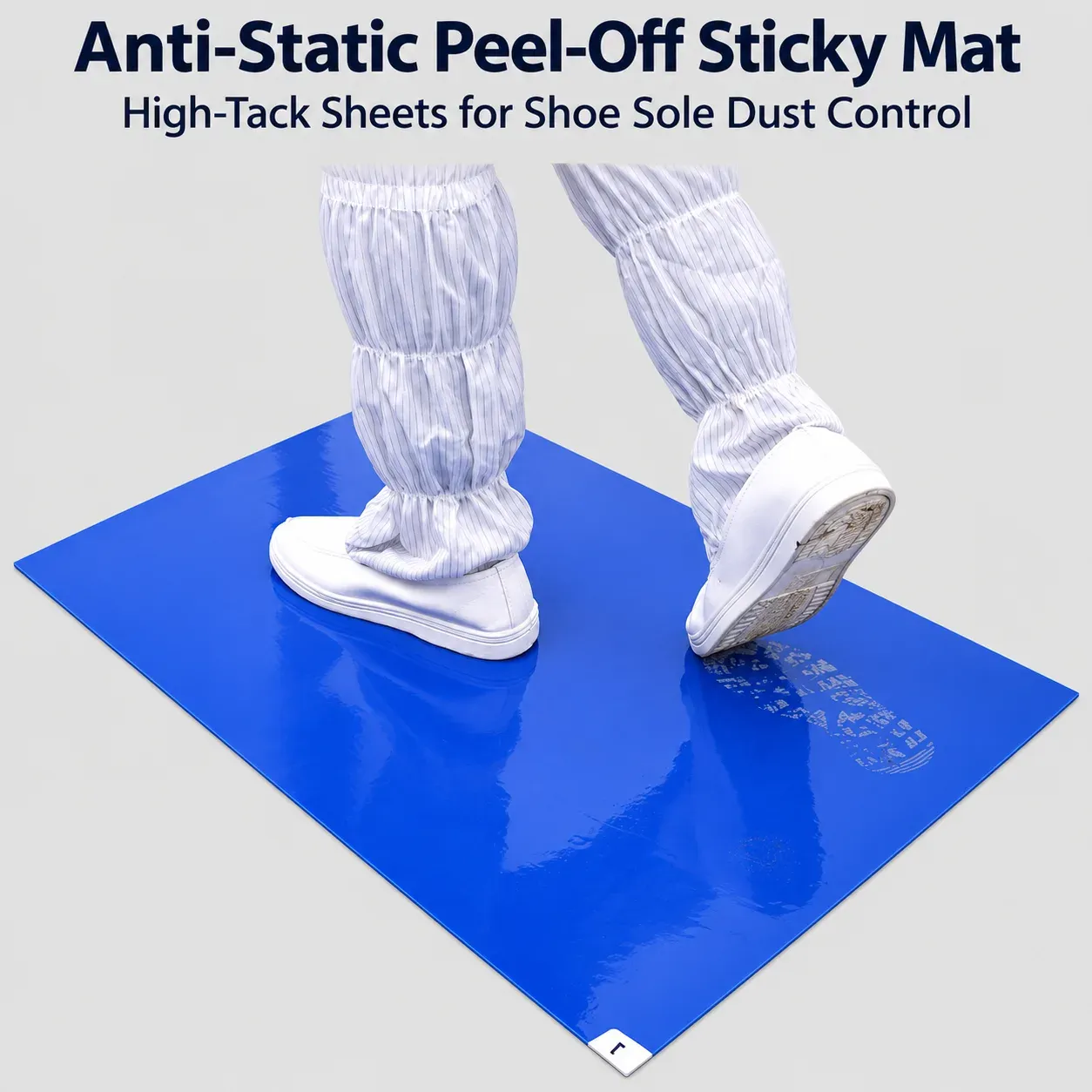
A sticky mat (also called a tacky mat or peel-off mat) is a stack of adhesive-coated film sheets fixed to the floor at the entrance of a controlled area. Each step lifts dust and loose particles from shoe soles and wheels. When the top sheet is loaded with dirt, it is peeled off by its corner tab and the next sheet is exposed. Every model in our CS range carries 30 sheets per mat.
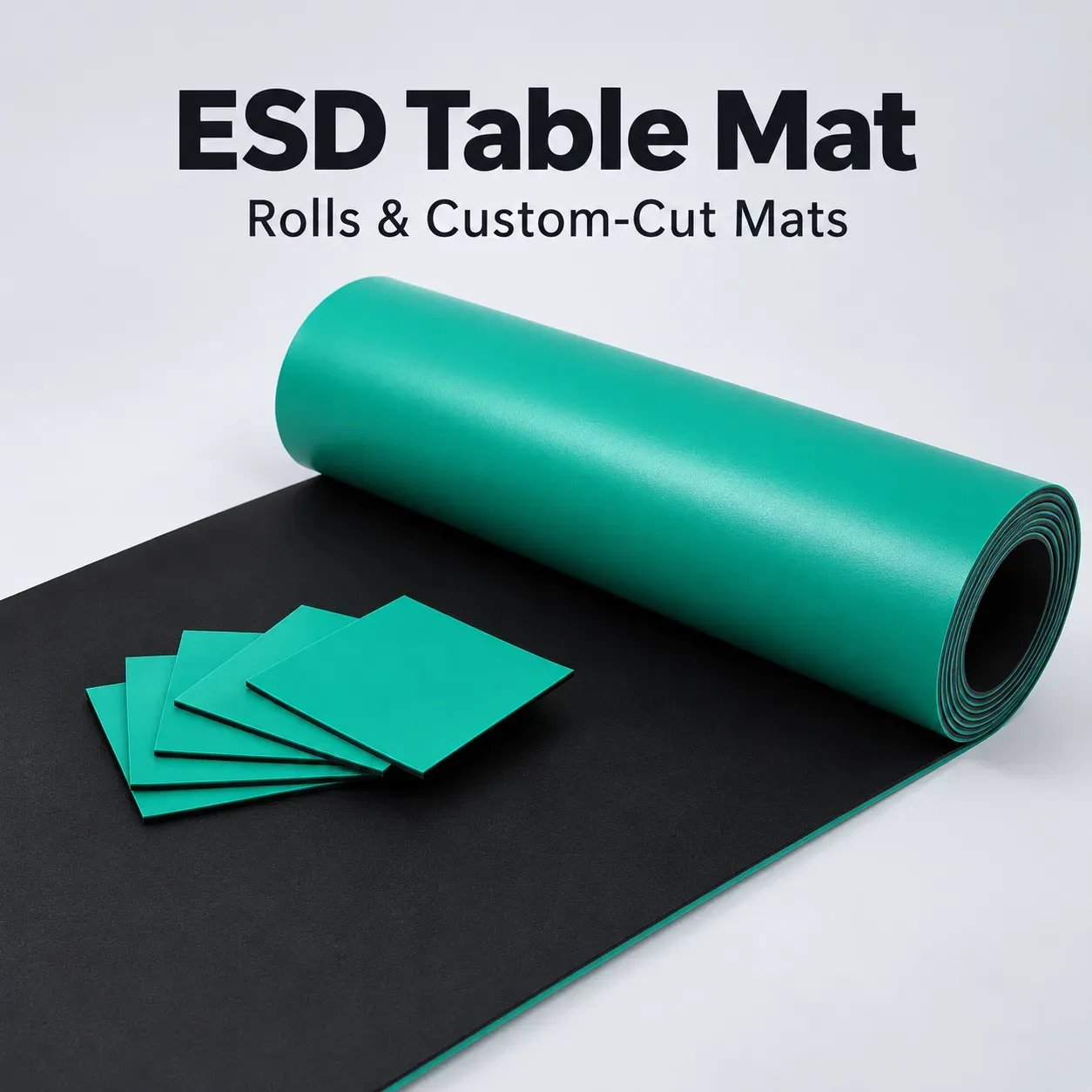
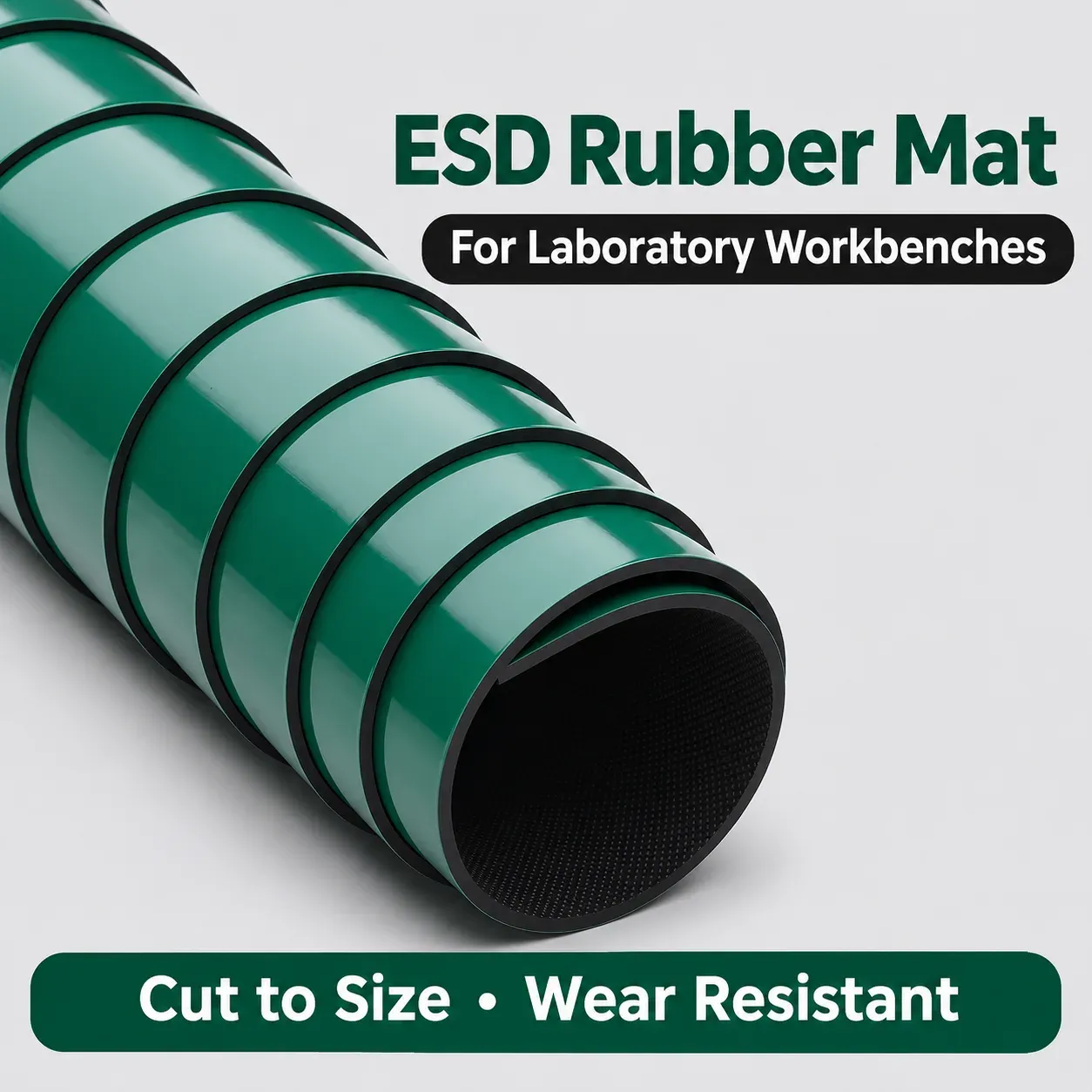
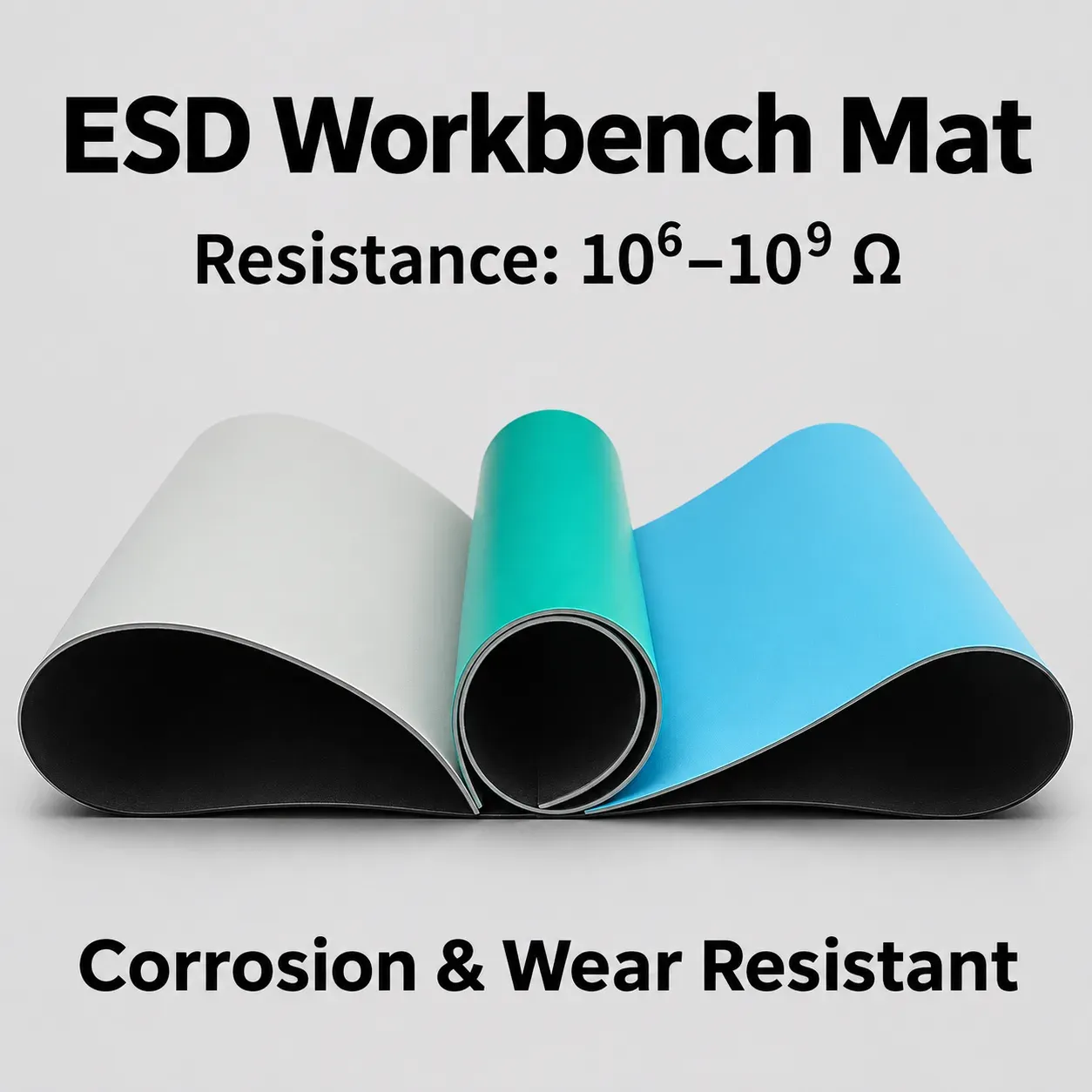
An ESD table mat is a work surface, not a floor product. It sits on the bench where electronics are handled, and its static-dissipative surface (our MS-E range: 10⁶–10⁹ Ω) drains charge from objects placed on it — but only when the mat is connected to ground, through a grounding snap and cord. An ungrounded ESD mat drains nothing.
Side by side
One model in the CS range, CS-003, is an anti-static variant made for entrances inside ESD-protected areas, where a standard sticky mat's peeling action could itself be a charge source. Anti-static describes the mat's own charge behaviour at the entrance. It does not give the mat a ground connection, it does not drain charge from devices, and it does not turn an entrance mat into a bench mat. The bench still needs a grounded ESD mat.
When a facility needs both
The two controls sit at different points of the same room:
- Sticky mat at the entrance — particles are stopped before they reach the work area.
- Grounded ESD mat at each bench — charge is drained where components are handled.
- Personnel grounding (wrist straps, footwear) connects the operator to the same ground point as the bench mat.
A small repair workshop or laboratory that handles circuit boards usually needs the second and third items first; the entrance mat is added when dust, not just static, is causing failures or rework.
What to confirm when ordering
Sticky mats: the doorway width the mat must cover — published standard sizes in the CS range run from 30 × 30 cm (CS-010) up to 78 × 88 cm (CS-003), and every model offers custom sizes. Tack level is currently described in words on the product pages (CS-002 and CS-003 are high-tack); no numeric peel value is published.
ESD mats: the bench size or roll width you need — MS-E mats and rolls are offered with custom cutting, and grounding snap installation is offered on custom-cut mats. Confirm the resistance range (10⁶–10⁹ Ω across the range) and the colour (green, blue, gray, black) on the product page of the model you choose.
FAQ
Can a sticky mat replace an ESD mat?
No. A sticky mat captures particles and has no connection to ground, so it drains no static charge. ESD protection at a bench requires a grounded dissipative surface. The two products control different risks at different points in the room.
Does an ESD mat help with dust?
Not in the same way. An ESD mat is a smooth bench surface that can be wiped clean, but it does not capture particles from shoe soles. Dust entering on footwear is controlled at the entrance, with a sticky mat.
What does "anti-static" mean on the CS-003 sticky mat?
It means the mat is made for entrances inside ESD-protected areas, where peeling a standard sheet could generate charge. It does not connect to ground and does not drain charge from devices, so it complements bench grounding rather than replacing it.
Which mat does a small electronics repair shop need first?
The grounded ESD bench mat, because charge damage happens at the bench where boards are handled. Add an entrance sticky mat when dust is also a problem, for example in a workshop that opens directly onto a street or warehouse floor.
Does an ESD mat work without a grounding cord?
No. The dissipative surface only drains charge when it has a path to ground, through a snap and cord. When ordering a custom-cut mat, confirm snap installation so the mat arrives ready to connect.
Bottom line
Buy the sticky mat for particles at the entrance and the ESD mat for charge at the bench. If a product description mixes the two claims, check which control point it actually serves — and for ESD mats, confirm the ground connection, because that is what makes the mat work.